Elf Concept Art: Character Design Ideas and Inspiration
Part of Character Design Gallery: Design Studies and Breakdowns
See the original work
Artist website
Official website
by Todd Lockwood
American fantasy illustrator known for Dungeons & Dragons art and cover art for R. A. Salvatore's Forgotten Realms novels.
See Official website on Artist website (opens in a new tab) ↗Artist website
Official website
by Larry Elmore
American fantasy artist who created the early look of TSR's Dragonlance saga, including its first cover, Dragons of Autumn Twilight.
See Official website on Artist website (opens in a new tab) ↗Elf concept art is a lesson in subtle difference. An elf is close to human, so the design has to tell the viewer, quickly and clearly, that this character is older, stranger or more graceful than the people around them. This guide breaks elf design into the tropes artists rely on (ears, proportions, nature motifs and flowing lines), then shows how to push them into something of your own. Every image here is our own analysis graphic or an annotated public-domain museum object. For professional elf art, follow the links to the artists’ official sites above.
What makes elf art work
Search for concept art elf references and you’ll see the same four tropes again and again. Good elf art uses them deliberately, not by default:
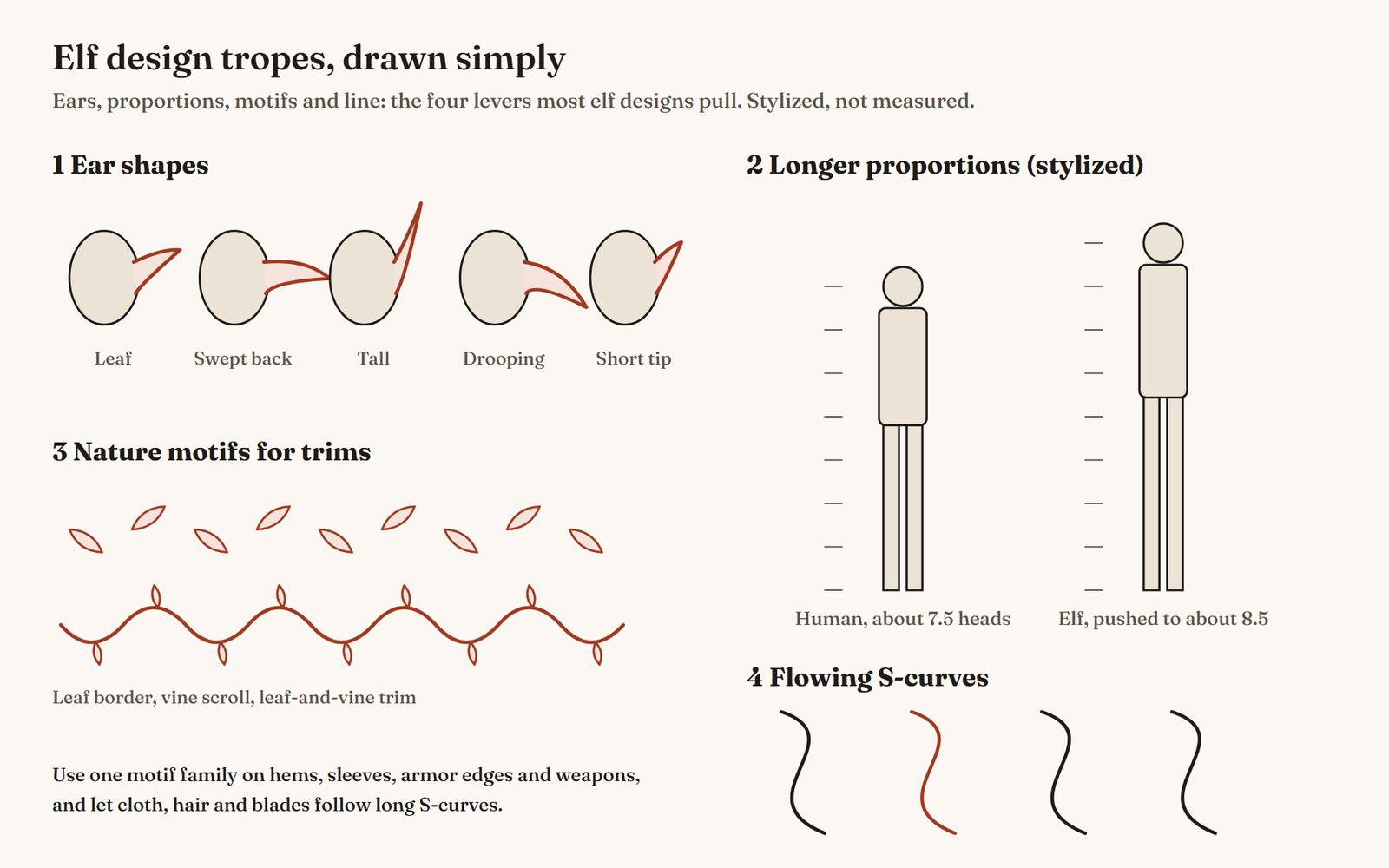
- Ears. The pointed ear is the fastest signal in elf artwork. Its shape carries personality: a short tip feels subtle and almost human, tall ears feel alert, swept-back ears feel elegant, drooping ears feel old or gentle.
- Proportions. Many artists stretch elves: longer legs and neck, a slightly smaller head, narrower shoulders. Pushing a figure from about 7.5 heads to 8.5 or more (a stylistic choice, not a measurement) makes it look taller and lighter.
- Nature motifs. Leaves, vines, branches and flowers repeat across hems, armor edges, jewelry and weapons, so the costume feels like it came from one culture.
- Flowing lines. Hair, cloaks and blades follow long S-curves rather than straight lines, which reads as grace and movement.
Elf silhouettes
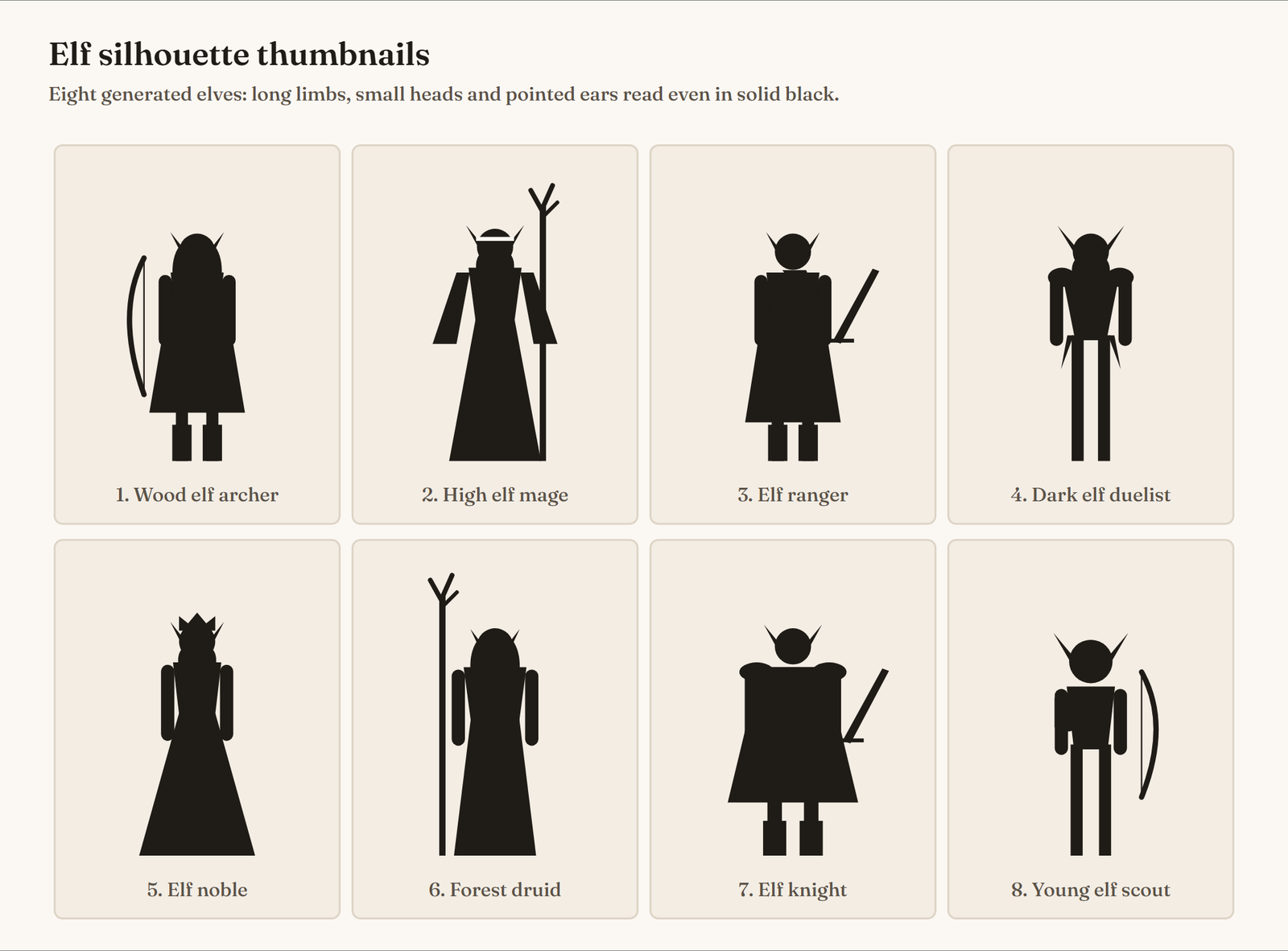
The silhouettes at the top of this page change only a few things: ear size, hair, cloak length, and the prop (a bow, a staff, twin blades). Even in solid black, an elf ranger, a high elf mage and a dark elf duelist read as different characters. Notice how the long legs and small heads make the whole set feel “elven” before you see a single ear.
Shape language for elves
Elves lean on tall, vertical shapes, but the dominant shape still decides how the character feels. Our guide to character design basics covers shape language in depth.
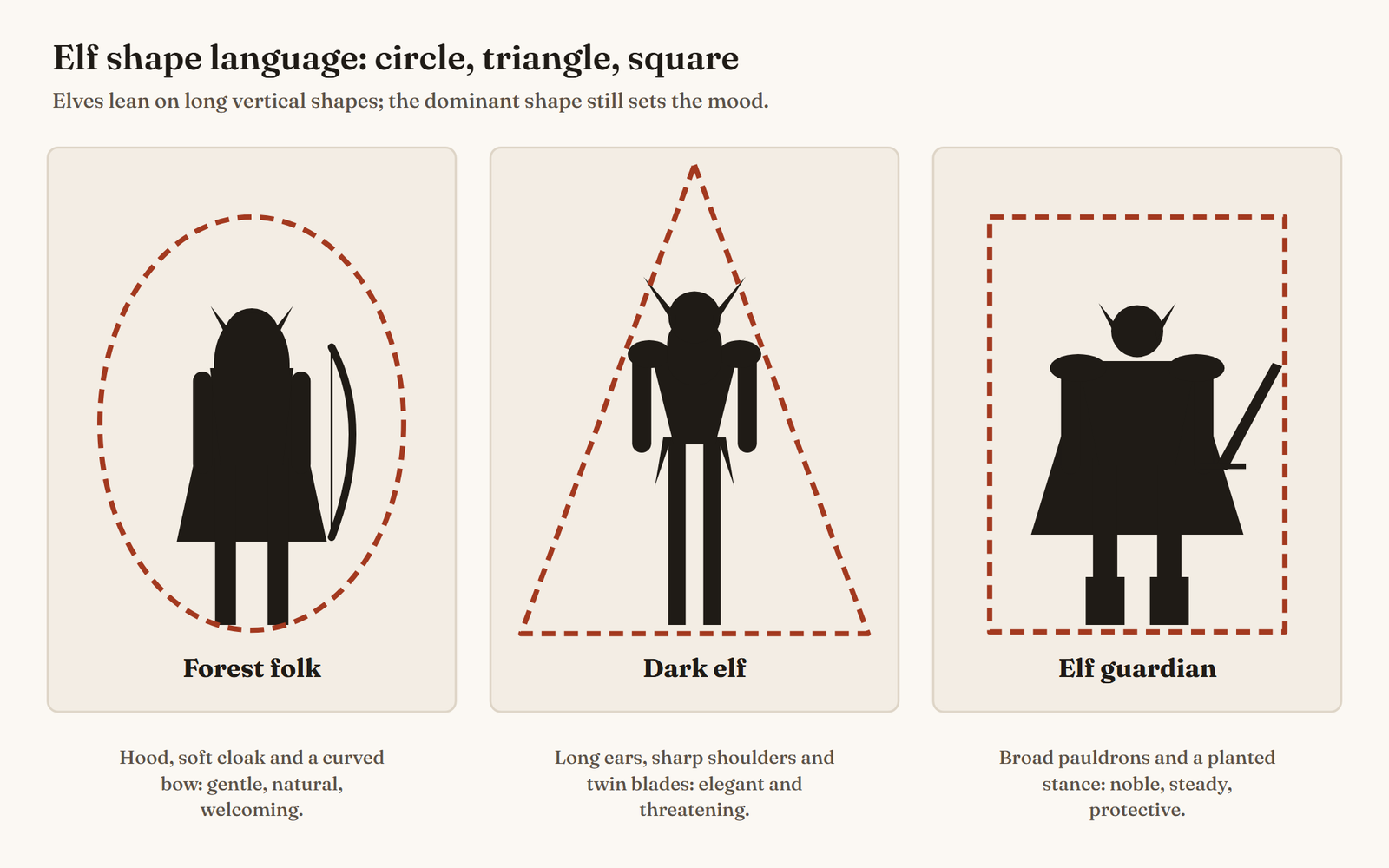
Round hoods, soft cloaks and curved bows make forest folk feel gentle. Sharp shoulders, long ears and twin blades make a dark elf feel dangerous. Broad pauldrons and a planted stance make an elf guardian feel noble and protective.
Blocking in an elf design
Start with the big decisions over a simple figure: ear shape, headwear, cloak and the main line of the body.
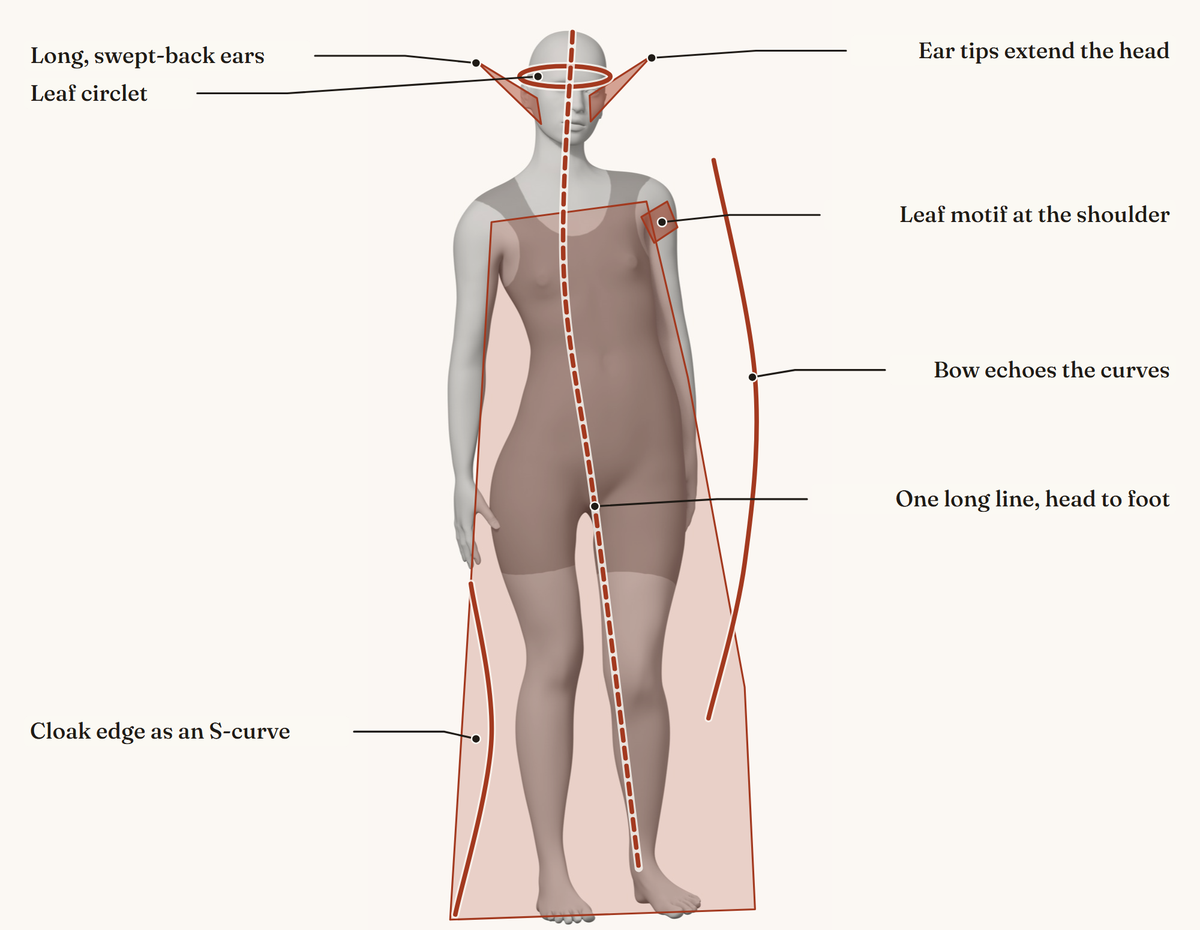
A slight contrapposto pose with one long line from head to foot already feels graceful. A cloak whose edge follows an S-curve, a bow that echoes it, and one leaf motif at the shoulder are enough to say “elf” before any detail goes in.
Nature motifs: lessons from ancient jewelry
Leaf ornament is thousands of years old. This Etruscan gold wreath from the 4th or 3rd century BCE, released by The Met as public domain, shows how real jewelers built leaf designs: leaves layered over a plain band, leaves radiating from a round center, embossed veins for texture, and one leaf breaking the edge so the shape doesn’t feel rigid.

Borrow the structure, not the surface: a plain band carrying a cluster of layered leaves makes a convincing circlet, belt clasp or sword guard. Change the leaf species and you change the culture.
Color: example elf palettes
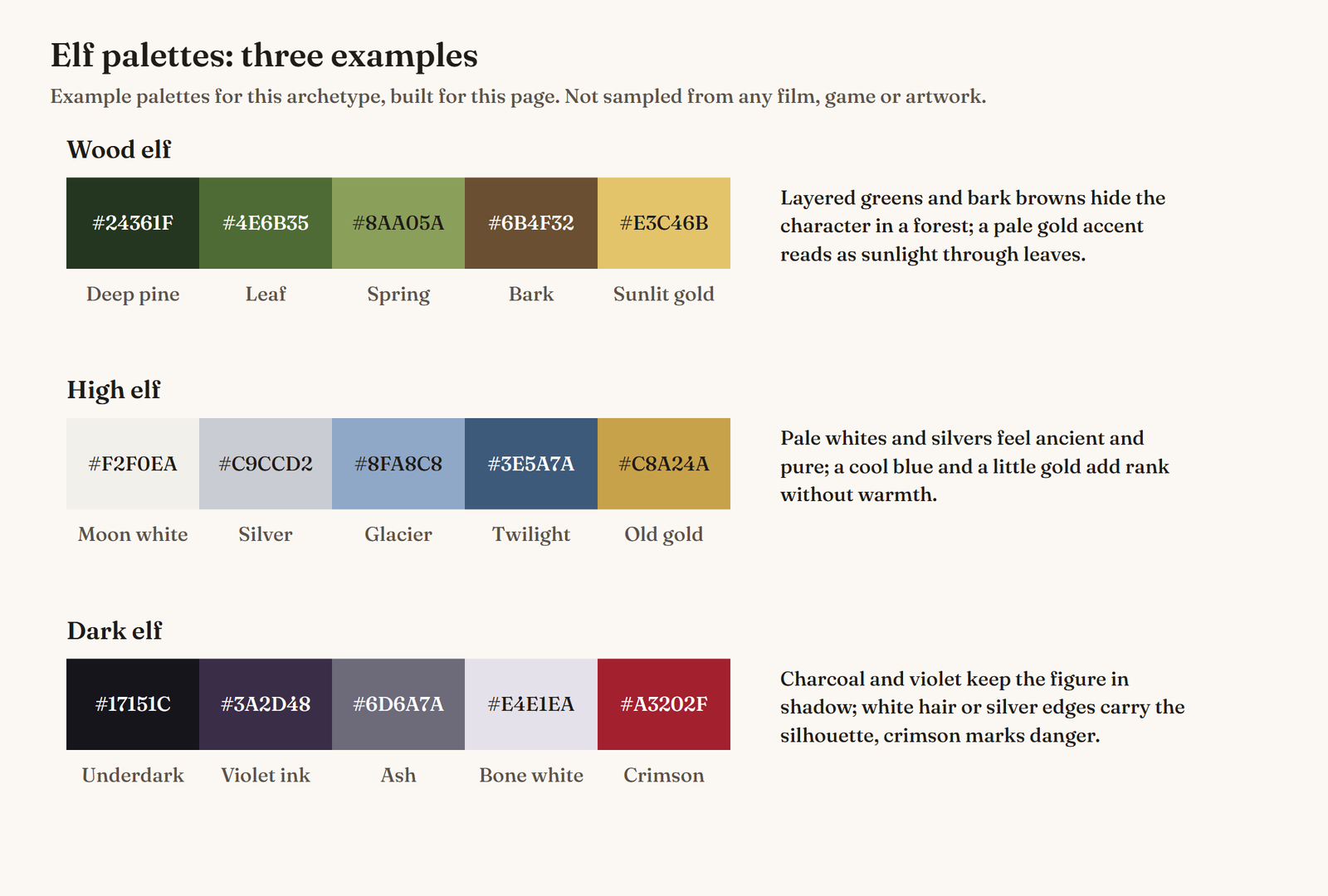
Wood elves usually sit in layered greens and browns, high elves in pale whites and silvers, dark elves in charcoal and violet. These palettes were built for this page as starting points. Keep the main costume in one family and save a small accent (sunlit gold, glacier blue or crimson) for the place you want the viewer to look.
Elf costume and props
Elf costumes usually favor layers that move: a fitted base, a longer tunic or robe, and a cloak or mantle on top. That layering gives you three edges to shape and three places to repeat your motif. A few choices that change the read quickly:
- Armor: elven armor tends to be thin, curved and overlapping, like leaves or scales, rather than thick and boxy. Curved plates also keep the flowing line through the body.
- Weapons: bows, long slender blades and spears suit the long proportions. Make the weapon part of the silhouette, as long as the figure is tall.
- Closures and fastenings: clasps, brooches and belt buckles are perfect places for the culture’s motif, small enough to read up close without cluttering the silhouette.
- Materials: pick one “signature” material (pale wood, silver, green leather, living vines) and repeat it, so the costume reads as handmade by one people.
Common mistakes in elf art
- Ears doing all the work. If you cover the ears and the character reads as human, push proportions, posture or costume further.
- Motifs everywhere. Leaves on every surface turn into noise. Keep large calm areas and put ornament on edges and focal points.
- Every elf the same height and build. Real cultures have stocky, old, young and tired people too. Variety makes the elves believable.
- Straight, stiff lines. Rigid poses and straight hems fight the graceful read. Let the line of action curve.
Elf design beyond the tropes
The best elf designs bend at least one trope on purpose. Try an elf with short, rounded ears but unnervingly still posture; an elf whose motifs come from coral and kelp instead of leaves; or a stocky, practical elf blacksmith who still moves in long, flowing lines. Ask what your elves’ long lives would really do to them: what they’d collect, what they’d stop caring about, what they’d never let go of. That’s where original elf design starts.
From elf concept art to finished elf art
Elf concept art explores: many silhouettes, alternate ears and costumes, and callouts that explain how armor or cloth works. Finished elf art presents one final design in a polished illustration. Most designers move from thumbnails, to a few color roughs, to a clean design sheet, and only then to a finished piece. Our guide to what a concept artist does explains how that works in a studio, and our design gallery collects more archetype studies like this one.
Design your own
- Design an elf without pointed ears. What else tells the viewer they aren't human?
- Design a desert elf. Swap the leaf motifs for something that grows in sand and stone.
- Design an old elf who has lived for centuries. Show their age without wrinkles.
- Turn a historical leaf wreath into an elven circlet, then design the culture that made it.
- Design a dark elf and a wood elf as rivals who share one costume element.
- Design an elf blacksmith. How do flowing lines survive heavy, practical work?
- Design an elf child and their elder with the same palette and opposite proportions.
- Draw eight elf silhouettes using only ears, hair and cloak shapes to tell them apart.
- Design an elf whose nature motif is the sea instead of the forest.
- Redesign a classic elf archer for a snowy mountain setting.